what are you looking for?

Illuminating a large outdoor area with solar lights requires more planning than simply placing lamps wherever extra light is needed. Parks, gardens, driveways, commercial grounds, pathways, and event areas can have very different lighting requirements. Before choosing fixtures, consider the size and layout of the area, the locations that need the most visibility, and whether the goal is general illumination, pathway lighting, security, or a combination of these. A simple layout plan can help avoid dark sections and unnecessary overlap between lights.
Light placement should follow the way people actually use the space. Pathways and entrances usually need continuous visibility, while open areas may require fixtures positioned farther apart to spread light over a wider section. Solar outdoor lights can be placed at key points around paths, boundaries, gardens, and other outdoor areas without requiring electrical wiring between each fixture. For larger spaces, however, the spacing should be based on the actual light output and coverage of the selected fixture rather than relying on appearance alone.
Solar exposure becomes especially important when lighting a large area. Each fixture needs enough direct sunlight during the day to generate and store the energy required for nighttime operation. The solar panel collects energy during daylight hours, while the battery stores that energy for the LEDs after dark. Trees, buildings, walls, and other obstructions can reduce charging performance, so the panel should be positioned where it receives sufficient sunlight. Solar LED lights can provide efficient illumination, but their operating time still depends on factors such as available sunlight, battery capacity, weather conditions, and the power requirements of the light.
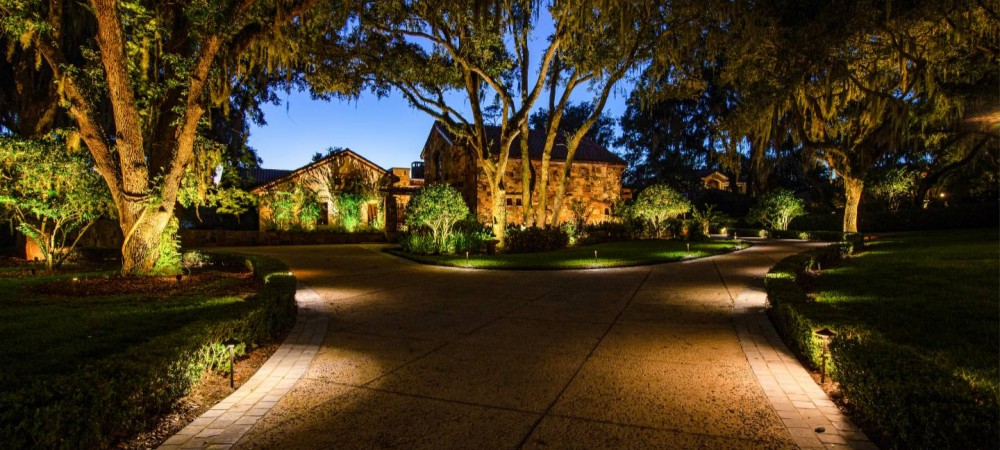
For larger outdoor areas, it can be more practical to divide the site into smaller lighting zones instead of trying to illuminate everything with a few high-output fixtures. Solar lighting systems can be arranged around entrances, walkways, parking areas, garden sections, or other specific zones according to their individual lighting needs. This approach also makes it easier to choose different fixture types or brightness levels for different parts of the property. Areas that require stronger visibility should not be treated the same way as decorative sections where softer lighting is sufficient.
Installation height and direction also affect the final result. Fixtures should be positioned so that their light reaches the intended area without being unnecessarily blocked by vegetation or structures. After installation, check the area at night to identify dark spots, excessive glare, or sections where the lighting does not reach as expected. For large outdoor spaces, good results come from combining suitable fixture output, adequate solar exposure, thoughtful spacing, and a layout based on how the area is actually used. This makes solar lighting more practical and reliable without depending on grid-connected wiring throughout the site.




Xiamen SLD Technology Co., Ltd
 Chengyi North Street, Software Park 3, Jimei District, Xiamen Fujian, China
 +86 188 5929 8629
 sales@solarlightsdo.com
 Blog | Sitemap | XML | Privacy Policy