what are you looking for?

Outdoor lighting helps make residential properties more convenient to use after dark. It illuminates entrances, improves visibility along pathways, and allows homeowners to enjoy gardens and patios in the evening. However, extending wired lighting to every part of a property can involve additional electrical work and installation costs. Solar powered lights offer an alternative by collecting energy from sunlight during the day and storing it in rechargeable batteries for nighttime use. Since they do not need a direct connection to household wiring, they can be installed in many locations where conventional outdoor lighting may be less practical.
For homeowners, reducing electricity consumption is another reason to consider solar lighting. Solar fixtures use stored solar energy during operation, which can lower the amount of electricity required for outdoor illumination. The actual savings depend on the number of lights installed, their brightness, operating time, and local electricity costs. Installation can also be more straightforward because many solar lights do not require underground cables or nearby power outlets. This flexibility is particularly useful when lighting garden borders, detached garages, fences, or other areas where running electrical wiring would be inconvenient. Adequate sunlight remains essential, however, as shaded locations and short winter days can affect charging and nighttime performance.
Good outdoor lighting should serve a clear purpose rather than simply make a property brighter. Near entrances and garages, it helps residents identify access points and see their surroundings when arriving home at night. Along steps and frequently used paths, suitable illumination can make changes in ground level easier to notice. Solar powered wall lights can provide practical lighting around exterior doors, side entrances, and garage walls without requiring a wired connection. Their effectiveness depends on brightness, mounting height, beam direction, and placement, so homeowners should choose fixtures that suit the area instead of relying on appearance alone.
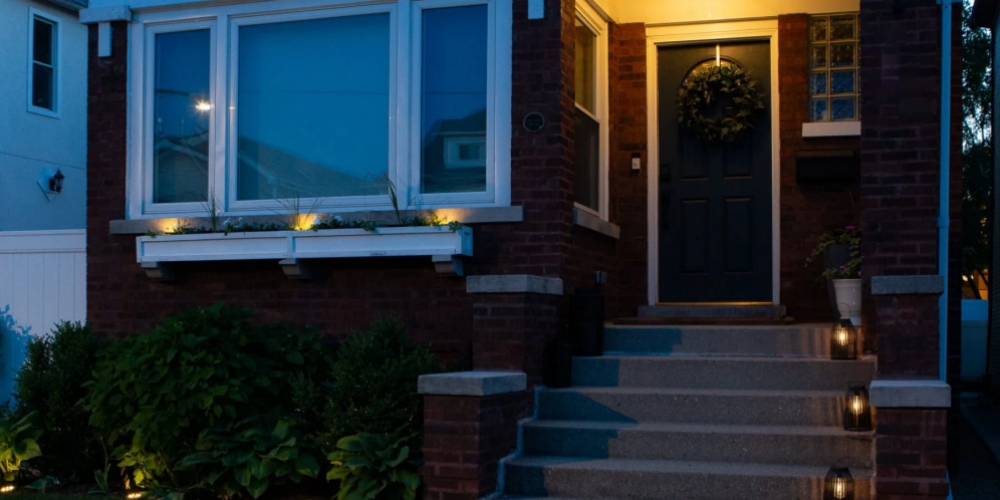
Solar lighting can also improve the appearance and usability of residential gardens. A thoughtfully lit yard feels more inviting after sunset, and selected features can remain visible without illuminating every corner. Garden solar spotlights can highlight a tree, planting bed, or architectural feature where focused illumination is preferred. For areas where the aim is to mark a route rather than highlight a specific feature, solar ground lamps can help define pathway edges and garden borders. The best results come from matching the type of light to its purpose and avoiding excessive brightness. Choosing suitable brightness and directing light where it is needed can create a comfortable outdoor environment while minimizing glare and unnecessary light spill.
Choosing suitable fixtures and placing them correctly will determine how well a solar lighting system performs over time. Before purchasing, homeowners should check the expected operating time, battery capacity, weather resistance, and sunlight requirements. Panels need sufficient daylight to charge effectively, and their output may be reduced by shade, dirt, or seasonal changes. Battery performance can also decline with age, making occasional inspection and replacement part of long-term maintenance. With appropriate placement and realistic expectations, solar powered lights can help homeowners reduce reliance on grid electricity, simplify outdoor installation, and create residential spaces that remain functional and attractive after dark.




Xiamen SLD Technology Co., Ltd
 Chengyi North Street, Software Park 3, Jimei District, Xiamen Fujian, China
 +86 188 5929 8629
 sales@solarlightsdo.com
 Blog | Sitemap | XML | Privacy Policy